

Tumblestone Hollow
Why Outdoor Play Matters More Than Ever
February has a quiet kind of promise about it. The days are stretching just enough to be noticed, winter begins to loosen its grip, and families start to feel the pull of the outdoors once more. After months of darker evenings and indoor routines, there’s a collective readiness for fresh air, movement and space to play.
It’s more than a seasonal shift, it’s a reminder of just how important outdoor play is for children, and how restorative it can be for families too.
Built for bodies that need to move
Outdoor play supports children in the most fundamental ways. Running, climbing, balancing and swinging all help to develop strength, coordination and resilience, while regular time outside contributes to bone health and overall physical wellbeing. Exposure to daylight also supports vitamin D levels, which are essential for growing bodies, particularly after the winter months.
The NHS recommends that children are active for at least 60 minutes a day, and being outdoors is one of the most natural ways to achieve this. When movement is driven by curiosity and play, children don’t experience it as exercise, it’s simply what they want to do.
Growing confident, curious minds
Beyond physical health, outdoor play plays a vital role in children’s cognitive development. Making up games, navigating space, testing boundaries and solving small problems all help children build confidence, independence and creative thinking.
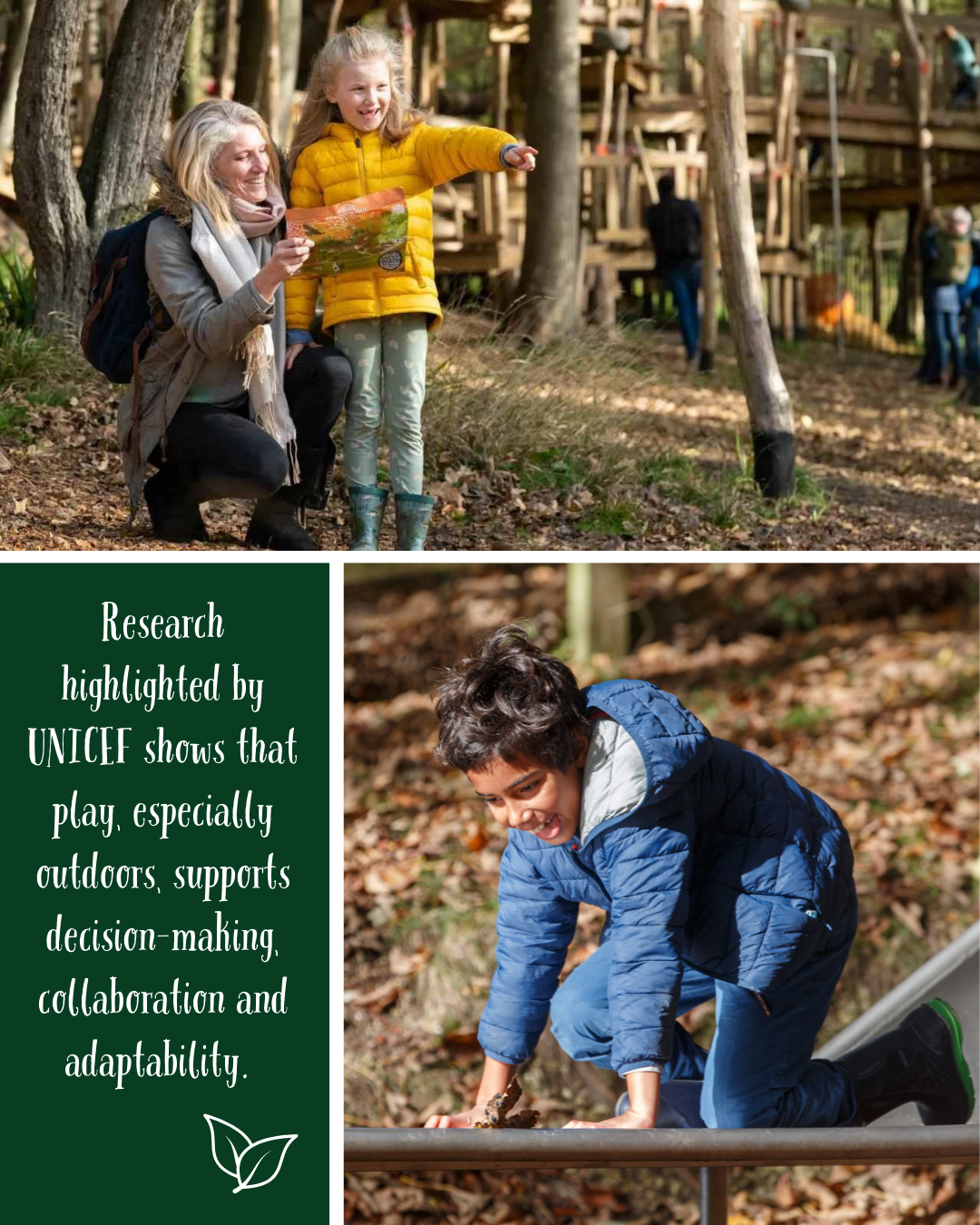
Research highlighted by UNICEF shows that play, especially outdoors, supports decision-making, collaboration and adaptability. It teaches children how to assess risk, negotiate with others and trust their own judgement. These are skills that quietly underpin learning, relationships and emotional resilience.
At Tumblestone Hollow, this kind of learning happens without instruction or expectation. Children are free to follow their instincts, climbing when they’re ready, exploring at their own pace, and discovering what they’re capable of through play.
Wellbeing, connection and time together
Time spent outdoors has also been shown to support emotional wellbeing. Research from Public Health England and Natural England links time in green spaces with improved mood, reduced stress and stronger social connection.
For parents, outdoor environments offer something equally valuable: time together that feels unforced. Conversations unfold naturally, friendships are rekindled, and children play without needing constant direction. It’s a rare kind of togetherness, one that doesn’t rely on screens, schedules or structured entertainment.
A much anticipated reset after winter
Winter can quietly shrink family life. Short days, busy routines and more time indoors often mean less spontaneous play and fewer shared moments outside.
February marks the turning point.
Outdoor play at this time of year helps children release pent-up energy, reconnect with friends and transition smoothly towards the busier rhythms of spring. For families, it’s an opportunity to reclaim half term as something simple and joyful, a chance to be together, outdoors, without needing to plan every moment.
Choosing real-world play over screens
Guidance from the World Health Organization consistently highlights the importance of balancing screen time with active play, particularly outdoors. What’s striking is how easily screens fade into the background when children are given engaging, open-ended spaces to explore.
No timers. No negotiations. Just better things to do.
A place to play, pause and spend the day
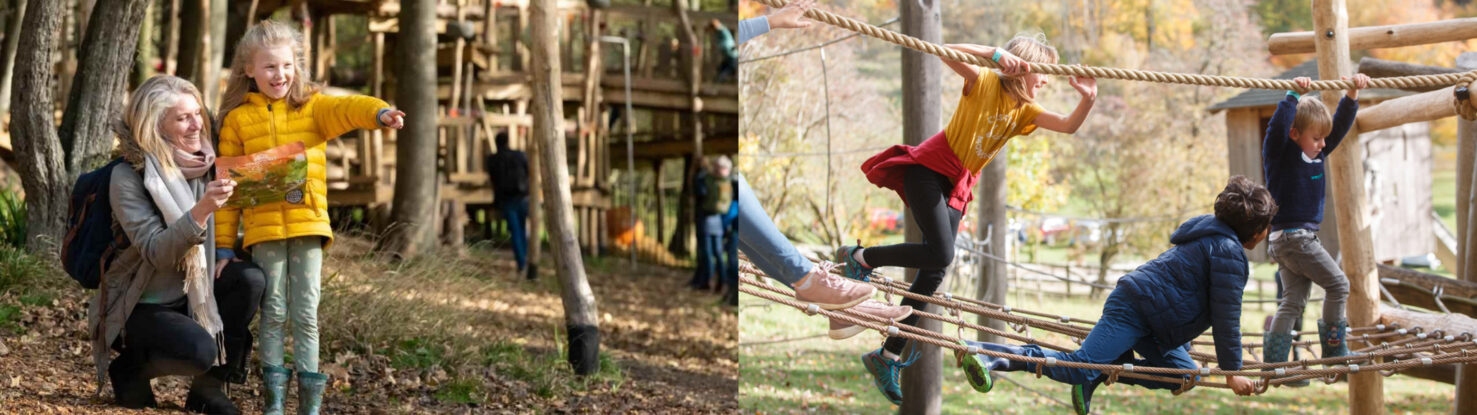
Set within the countryside grounds of Stonor Park, Tumblestone Hollow offers families the chance to spend an entire day outdoors at their own pace. Alongside the adventure playground, designed for energetic, imaginative play, families can explore the gardens as part of their visit, adding moments of discovery into the day.
Love the Outdoors adventure days also include thoughtful touches that make the experience work for everyone: an interactive activity sheet to guide curious explorers, warm food and hot chocolates, excellent coffee for parents, and sheltered seating so there’s always a place to pause, whatever the weather.
Love the Outdoors this February half term
From 14–22 February, Tumblestone Hollow reopens its gates for families ready to step back into outdoor play. It’s a celebration of fresh air, movement and time together, the kind of half term that leaves everyone feeling a little brighter.
Because the best half term days aren’t the busiest ones. They’re the ones spent outside, together.
Click here to find out more and book
Sources & further reading
– NHS – Physical activity guidelines for children
– World Health Organization – Screen time and physical activity guidance
– UNICEF – The importance of play in child development
– Public Health England / Natural England – Wellbeing and nature research